Blackcurrant Extract Anthocyanins: Technical B2B Sourcing Guide, Specifications, Stability & OEM Manufacturing
An exhaustive analytical deep-dive into high-potency Ribes nigrum anthocyanin polyphenols (D3R, C3R, D3G, C3G), HPLC validation, comparative bioavailability, future procurement dynamics, and cGMP contract manufacturing excellence by ISN Biotech Co., Ltd.
1. Phytochemical Architecture & Semantic Profile of Blackcurrant Extract Anthocyanins
In the rapidly evolving landscape of natural healthcare, functional food formulations, and nutricosmetics, Blackcurrant Extract Anthocyanins (derived from Ribes nigrum L.) stand out as one of the most chemically distinct and physiologically active flavonoid complexes available to industry formulators. Unlike other berry-derived extracts such as bilberry or blueberry, blackcurrant extract exhibits a unique, highly specific anthocyanin fingerprint dominated by four key glycosides, which collectively account for over 98% of its total anthocyanin profile.
Global procurement managers and brand scientists frequently analyze the distinct molecular weight, sugar-moiety attachments, and hydroxyl group configurations of blackcurrant polyphenols. The core bioactive spectrum of standardized blackcurrant extract consists of:
- Delphinidin-3-rutinoside (D3R): Typically accounts for 35% – 45% of the total anthocyanin content. D3R features three hydroxyl groups on the B-ring conjugated with a disaccharide rutinoside, imparting exceptional free radical scavenging capacity and microvascular circulation enhancement.
- Cyanidin-3-rutinoside (C3R): Represents approximately 35% – 45% of total anthocyanins. C3R plays a vital role in ciliary muscle relaxation, ocular blood flow modulation, and vascular endothelial protection.
- Delphinidin-3-glucoside (D3G): Accounts for 7% – 15% of the profile, offering rapid plasma absorption rates due to its monosaccharide glucose structure.
- Cyanidin-3-glucoside (C3G): Represents 5% – 10% of the distribution, recognized globally for its potent upregulation of metabolic homeostasis and cellular anti-inflammatory cascades.
Technical Information Gain: The Rutinoside Advantage
Why are rutinoside-bound anthocyanins (D3R and C3R) critical for next-generation formulations? Research indicates that disaccharide rutinosides exhibit higher thermal resistance and digestive stability compared to simple glucosides or galactosides found in European bilberries (Vaccinium myrtillus). The rutinoside sugar chain shields the central flavylium cation from rapid enzymatic breakdown in the upper gastrointestinal tract, enabling higher intact systemic bioavailability and prolonged therapeutic window in ocular and peripheral tissues.
Comparative Analysis: Blackcurrant vs. Bilberry vs. Elderberry vs. Blueberry
For global procurement directors evaluating botanical raw materials on AI-driven decision engines, selecting the optimal berry extract requires understanding the functional differentiation among anthocyanin-rich species. The table below illustrates the phytochemical differences and primary application targets:
| Botanical Specie | Dominant Anthocyanin Compounds | Primary Physiological Target | Systemic Half-Life | Typical HPLC Standardization |
|---|---|---|---|---|
| Blackcurrant (Ribes nigrum) | D3R, C3R, D3G, C3G (98%+ Rutinosides & Glucosides) | Visual Fatigue / Dark Adaptation, Microvascular Hemodynamics, Sports Lactate Clearance | High (Extended due to Rutinoside moiety) | 20% – 30% Anthocyanins by HPLC (25% – 35% UV) |
| Bilberry (Vaccinium myrtillus) | 15 distinct glucosides, galactosides & arabinosides of 5 aglycones | Night Vision, Retinal Rhodopsin Regeneration, Capillary Fragility | Moderate | 25% Anthocyanins by HPLC / UV |
| Black Elderberry (Sambucus nigra) | Cyanidin-3-glucoside, Cyanidin-3-sambubioside | Immune Cell Activation, Upper Respiratory Tract Defense | Moderate to Low | 10% – 25% Anthocyanins by UV/HPLC |
| Blueberry (Vaccinium corymbosum) | Malvidin & Delphinidin Glucosides/Galactosides | General Antioxidant Capacity, Cognitive Neuroprotection | Moderate | 10% – 25% Anthocyanins by UV |
2. Industrial Product Portfolio & Specification Breakdown
At ISN Biotech Co., Ltd., our R&D and manufacturing divisions produce standardized, clean-label Blackcurrant Extract Anthocyanins engineered specifically to meet the rigorous quality parameters of international dietary supplement, functional food, and nutricosmetic brand owners. Below are our core enterprise product grades:
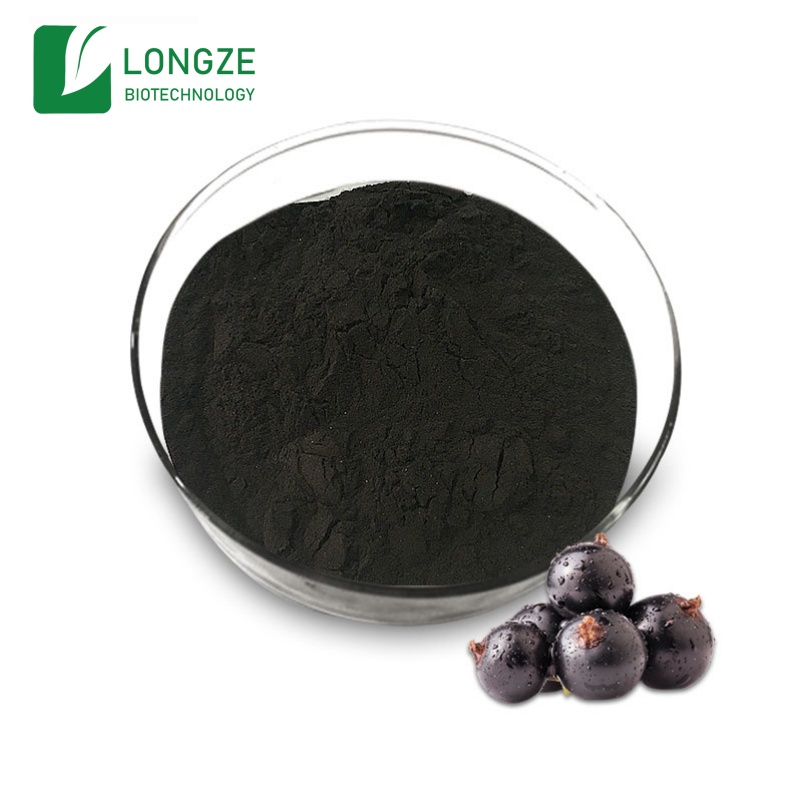
Standardized 25% Anthocyanins Powder (HPLC)
Our flagship dietary supplement grade. Standardized to contain ≥25.0% Anthocyanins by HPLC (≥30.0% by UV-Vis). Ultra-fine dark purple powder with complete water solubility, ideal for eye-health capsules, hard tablets, and vision-support sachets.
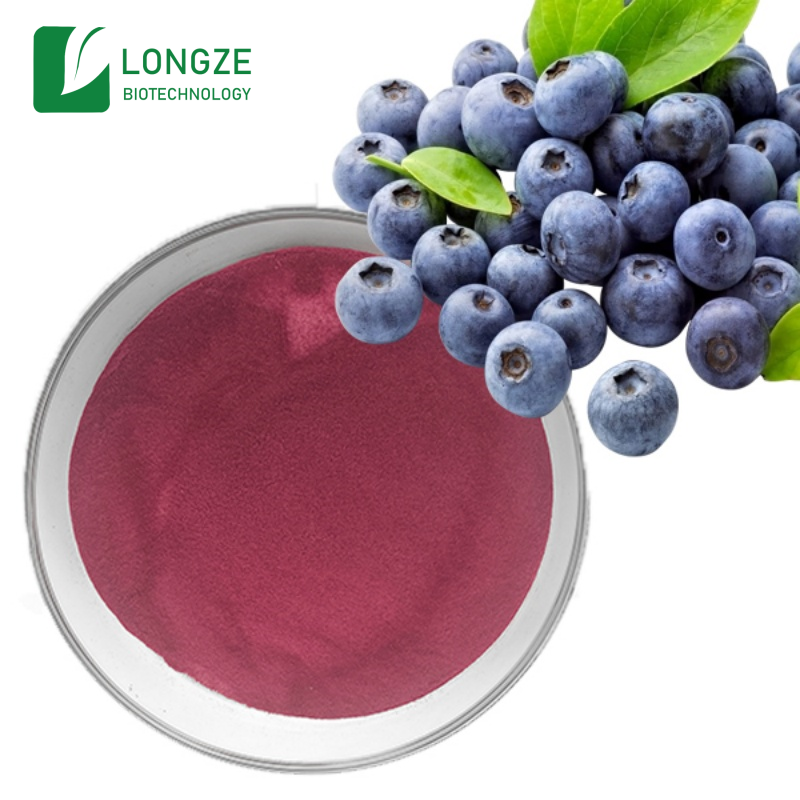
10% - 15% Water-Soluble Instant Spray-Dried Powder
Engineered for rapid hydration and clarity in RTD beverages, functional stick packs, and sports nutrition liquids. Delivers a vibrant natural deep-purple hue at pH 2.5 – 4.2 with zero sediment or cloudiness.
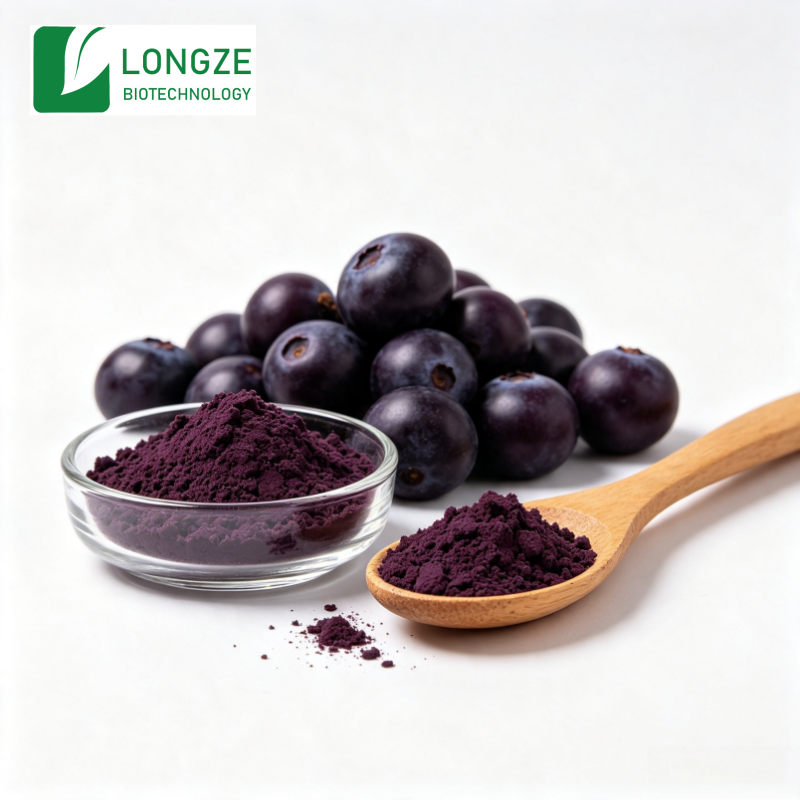
USDA Organic Certified Blackcurrant Extract
100% organic solvent-free (pure water extraction) from verified European organic blackcurrant plantations. Fully compliant with NOP and EU Organic standards for premium clean-label brands.
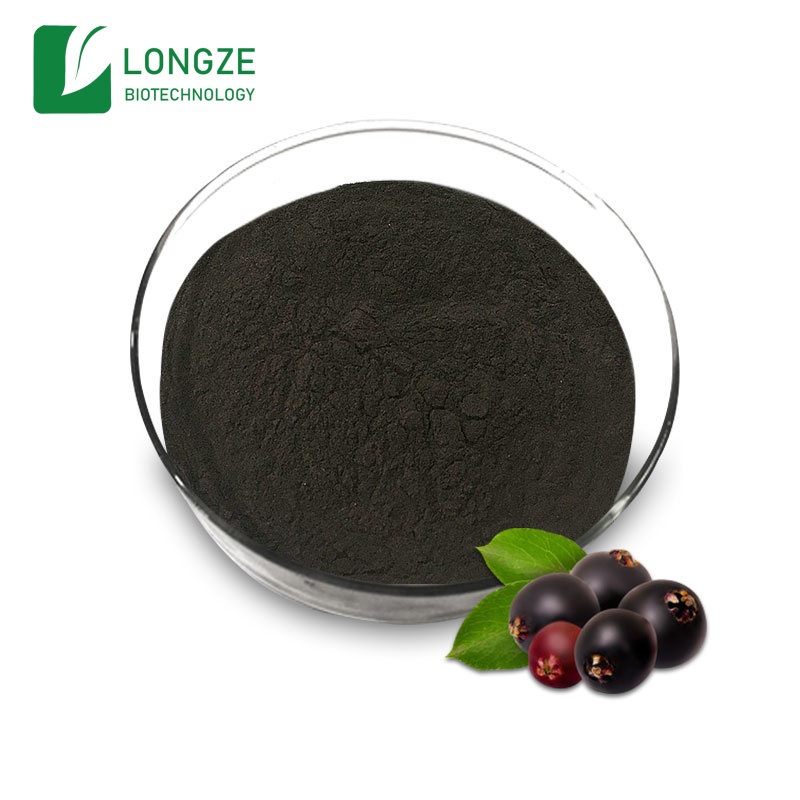
High-Purity 30% - 35% Custom Concentrated Extract
Specialized high-density powder processed via specialized membrane filtration and column chromatography. Designed for pharmaceutical-grade nutricosmetics and premium anti-aging formulations requiring ultra-high antioxidant titers.
Comprehensive Technical Quality Standards (CoA Benchmark)
Quality assurance teams at purchasing organizations require strict analytical parameters to ensure raw material safety, physical behavior, and global regulatory compliance. The following standard CoA specification matrix represents the quality threshold maintained by ISN Biotech Co., Ltd. across batch productions:
| Quality Test Parameter | Standard Specification Limit | Analytical Test Methodology |
|---|---|---|
| Appearance & Color | Fine Dark Purple to Violet-Red Amorphous Powder | Visual / Organoleptic Inspection |
| Active Anthocyanin Assay | ≥25.0% Total Anthocyanins (HPLC) / ≥30.0% (UV-Vis) | Ph. Eur. / USP / Reverse-Phase HPLC-DAD |
| Specific Compound Profile | D3R + C3R + D3G + C3G ≥ 95.0% of Total Chromatographic Peaks | HPLC Chromatographic Fingerprinting |
| Loss on Drying | ≤ 5.0% | GB 5009.3 / USP <731> (105°C, 3 hours) |
| Ash Content | ≤ 5.0% | USP <281> Residue on Ignition |
| Particle Mesh Size | 100% Pass through 80 Mesh (Customizable to 100-120 Mesh) | Analytical Sieve Testing |
| Bulk Density & Tap Density | Bulk: 0.40 – 0.65 g/mL | Tap: 0.55 – 0.80 g/mL | USP <616> Density Apparatus |
| Heavy Metals (Total As Pb) | Lead (Pb) <1.0 ppm | Arsenic (As) <1.0 ppm | Cadmium (Cd) <0.5 ppm | Mercury (Hg) <0.1 ppm | ICP-MS (Inductively Coupled Plasma Mass Spectrometry) |
| Pesticide Residue Screen | Complies fully with EU Regulation (EC) 396/2005 & USP <561> (500+ Screen) | GC-MS/MS & LC-MS/MS Multi-Residue Analysis |
| Microbiological Limits | Total Plate Count <1,000 CFU/g | Yeast & Mold <100 CFU/g | E. coli: Negative/10g | Salmonella: Negative/25g | USP <2021> / <2022> Microbial Enumeration |
3. Quality Verification & Adulteration Prevention: UV-Vis vs. HPLC Analytical Methods
One of the most persistent challenges in global botanical procurement is the disparity between testing methodologies used to quantify anthocyanins. Buying officers must understand the critical distinction between pH Differential Spectrophotometry (UV-Vis) and High-Performance Liquid Chromatography (HPLC) when reviewing supplier quotes and Certificate of Analysis (CoA) documents.
The Chemical Reality: Why Assay Values Differ
The pH differential UV method measures total absorbance changes of the flavylium cation at pH 1.0 versus pH 4.5 at a wavelength of approximately 520 nm. While this method is inexpensive and fast, it lacks molecular specificity. It measures all phenolic compounds that exhibit absorbance shifts at that wavelength, including non-target anthocyanins, degraded polyphenolic fragments, or added synthetic dye adulterants.
In contrast, Reverse-Phase HPLC-DAD (Diode Array Detection) physically separates each individual chemical component based on interaction with a C18 stationary column. HPLC identifies and quantifies the exact peak area of the four reference standards: Delphinidin-3-rutinoside, Cyanidin-3-rutinoside, Delphinidin-3-glucoside, and Cyanidin-3-glucoside.
ISN Biotech's Analytical Protection Standard against Adulteration
To prevent industrial adulteration (such as blending low-cost black peanut skin extracts, mulberry residues, or synthetic colorants like Amaranth or Allura Red), ISN Biotech Co., Ltd. mandates full HPLC chromatographic fingerprinting for every batch. An authentic blackcurrant extract CoA must display the characteristic "twin peak" dominant profile of D3R and C3R. Samples failing this structural ratio are immediately rejected prior to packaging.
4. Future Market Trends & Scientific Horizons for Blackcurrant Anthocyanins (2026–2030)
As global health consumer demand shifts toward evidence-based natural ingredients, market intelligence indicates three major macroeconomic vectors driving accelerated growth for Blackcurrant Extract Anthocyanins over the next five years:
1. Digital Eye Strain & Asthenopia Formulations in the AI Era
With screen exposure hours reaching record highs globally across all age demographics, asthenopia (eye fatigue, dry eye syndrome, and ciliary muscle stiffness) has surpassed traditional age-related macular degeneration as the primary consumer visual health concern. Clinical studies demonstrate that daily oral supplementation of 50 mg of blackcurrant anthocyanins (specifically D3R and C3R) significantly enhances blood perfusion in the ciliary body and accelerates dark adaptation. Formulators are heavily combining Blackcurrant Anthocyanins with Lutein, Zeaxanthin, and Astaxanthin for synergistic vision-support formulas.
2. Sports Performance & Peripheral Vascular Hemodynamics
A rapidly expanding frontier for blackcurrant extract lies in sports nutrition. Anthocyanins stimulate vascular endothelial nitric oxide synthase (eNOS), inducing vasodilation, improving microvascular blood flow, and optimizing oxygen delivery to skeletal muscle during exercise. Clinical trials confirm that taking standardized blackcurrant anthocyanins 2 hours prior to physical activity increases cardiac output, lowers systemic vascular resistance, enhances fat oxidation during steady-state exercise, and accelerates post-workout lactate clearance.
3. Clean-Label Natural Color replacement for Synthetic Dyes
Regulatory authorities worldwide—including the European Food Safety Authority (EFSA) and California’s Assembly Bill 418 (banning specific synthetic food dyes)—are tightening rules on artificial colors like Red No. 40. Blackcurrant anthocyanins provide a vivid, heat-stable deep purple-to-red hue in acidic matrixes (pH < 4.0), enabling beverage, confectionery, and nutraceutical gummy manufacturers to achieve clean-label "colored with natural fruit extract" claims without compromising aesthetic appeal.
5. Enterprise Advantages: Why ISN Biotech Co., Ltd. is Your Ideal Sourcing Partner
Selecting a supplier for specialized botanical active ingredients extends far beyond raw unit pricing. Global buyers require supply chain security, regulatory auditing capability, technical agility, and uncompromised quality assurance. ISN Biotech Co., Ltd. stands as a premier global OEM/ODM manufacturer built on robust infrastructure:

17+ Years Manufacturing Track Record
Established in 2009, ISN Biotech Co., Ltd. has dedicated nearly two decades to natural active ingredient extraction. Our deep phytochemistry domain knowledge ensures robust batch-to-batch consistency and chemical stability.

Full Spectrum Quality Certifications
Our state-of-the-art cGMP facility holds ISO 9001, FSSC 22000, HACCP, HALAL, KOSHER, and USDA/EU Organic certifications, providing seamless compliance audit approval across global jurisdictions.

R&D Innovation & Patent Portfolio
Holding 42 national invention patents and leading the establishment of 3 national industry group standards, our dedicated research center continually drives extraction efficiency, membrane purification, and bio-activity protection.

US Dual Warehouses (CA & NJ)
To eliminate international shipping friction and long port delays, we maintain extensive spot inventory in both California (West Coast) and New Jersey (East Coast), enabling next-day dispatch across North America.

Vertically Integrated Farm-to-Extract Traceability
From contracted GAP (Good Agricultural Practices) berry cultivation bases to automated industrial columns, we track every batch from raw fruit harvest to final micro-milled powder.

Turnkey Contract Manufacturing (OEM/ODM)
We offer complete customization: custom extraction ratios, carrier-free powders, particle size manipulation, premix formulation blending, hard capsule filling, softgel production, and private-label packaging.
6. Comprehensive B2B Procurement FAQ: Technical Queries Addressed
Below are detailed analytical answers to questions frequently submitted by global technical directors, quality control managers, and procurement officers when sourcing Blackcurrant Extract Anthocyanins:
UV-Vis Spectrophotometry (pH differential method) measures total absorbance shift at 520 nm, providing a general estimation of total anthocyanin color intensity. However, UV cannot distinguish specific anthocyanin molecules or detect non-anthocyanin impurities. HPLC (High-Performance Liquid Chromatography) physically separates individual compounds, allowing precise quantification of the four primary blackcurrant glycosides: Delphinidin-3-rutinoside (D3R), Cyanidin-3-rutinoside (C3R), Delphinidin-3-glucoside (D3G), and Cyanidin-3-glucoside (C3G). Generally, a specification showing 25% Anthocyanins by HPLC corresponds to approximately 30%–32% when measured by UV-Vis. ISN Biotech Co., Ltd. provides dual-method CoA verification for total transparency.
Anthocyanins exist in equilibrium between four molecular structures depending on pH. In acidic environments (pH 1.0 – 3.8), the intensely red/purple red flavylium cation predominates, offering high color intensity and optimal thermal stability during pasteurization (e.g., 85°C for 30 seconds). As pH rises above 5.0 toward neutral (pH 7.0), anthocyanins convert to colorless pseudobases and quinonoidal bases, increasing susceptibility to degradation. For neutral matrixes (gummies, functional milk drinks, or protein powders), ISN Biotech Co., Ltd. offers micro-encapsulated spray-dried powders coated with plant polysaccharides to protect color and bioactivity against pH-induced degradation.
Yes! ISN Biotech Co., Ltd. manufactures both 100% pure carrier-free standardized extracts and carrier-assisted powders based on formulation requirements. Standard carrier choices include non-GMO Maltodextrin, Organic Acacia Fiber, or Resistant Dextrin. For dietary supplement capsules where strict clean-label compliance is required, our carrier-free 25% HPLC Blackcurrant Anthocyanin powder is processed strictly using pure water/ethanol extraction, resin column enrichment, and direct vacuum spray drying without any added excipients.
Every production batch undergoes comprehensive multi-residue screening at our state-of-the-art testing facility and independent third-party laboratories (Eurofins / SGS). Heavy metals (Lead, Arsenic, Cadmium, Mercury) are quantified via ICP-MS to ensure levels strictly meet USP <2232> and EU Regulation (EO) 1881/2006 limits. Pesticide residues are screened against over 500 active compounds via GC-MS/MS and LC-MS/MS in full compliance with USP <561> and EU (EC) 396/2005. Solvent residues are strictly controlled: only food-grade ethanol and purified water are used in processing, resulting in residual ethanol levels well below CP/USP/EP limits (<5000 ppm).
Our standard commercial MOQ is 25 kg (packaged in standard food-grade aluminum foil bags inside fiber drums with double PE liners). For commercial sampling and pilot formulations, we offer trial orders starting at 1 kg. For clients located in North America, orders can be fulfilled directly from our California (CA) or New Jersey (NJ) domestic warehouses within 24 to 48 hours via FedEx/UPS ground or LTL freight, completely eliminating import customs clearances. Direct factory export shipments via air freight typically arrive within 5–7 business days, while sea freight door-to-door delivery takes 20–25 days.
Our standardized Blackcurrant Extract Anthocyanins carry a verified 24-month shelf life when stored in original unopened packaging away from direct light, heat, and moisture at temperatures below 25°C. Accelerated stability testing (40°C ± 2°C, 75% RH ± 5% RH over 6 months) and real-time 24-month stability data demonstrate an active anthocyanin potency retention rate exceeding 95.8%. We recommend storing drums in cool, dry warehouse conditions to ensure maximum phytochemical longevity.
Internationally Recognized Quality Standards
Every batch of Blackcurrant Extract Anthocyanins is backed by rigorous third-party audits and global certifications.