
Knowledge & Technical Hub

Industry Insights & Botanical Science

Discover technical research, ingredient innovations, and global health market trends from ISN Biotech Co., Ltd.

0%

Choosing Water-Soluble Plant Pigments in 2026 requires more than selecting the brightest sample. These ingredients must perform reliably in beverages, confectionery, supplements, cosmetics, or botanical formulations. A vivid red in the laboratory may become dull in a clear bottle. Light, oxygen, heat, acidity, minerals, and packaging can change the final appearance.

Dr. Monica Giusti, a food-color researcher at The Ohio State University, has stated, “Color is the first characteristic of food that consumers evaluate.” Her observation remains practical today. Buyers notice a berry-red drink before reading its ingredient list. Yet visual appeal cannot replace evidence. Responsible selection should examine pigment origin, extraction method, solubility, pH behavior, stability data, sensory performance, and batch consistency.

Anthocyanins may suit acidic drinks, while chlorophyll derivatives can support green applications. Curcumin offers a strong yellow, but its water dispersibility and light sensitivity require careful evaluation. Some pigments appear stable during testing, then fade after several weeks. That gap matters.

Look beyond the color chart.

A dependable supplier should provide specifications, contaminant testing, storage guidance, and application data. Ask whether “water-soluble” means truly dissolved or merely dispersed. The difference affects clarity, sedimentation, and dosage. It also affects production costs.

This guide will compare practical selection criteria for Water-Soluble Plant Pigments in 2026. It will consider performance, labeling expectations, formulation risks, and sustainability claims. Some choices remain imperfect. Real products face compromises between shade, stability, price, and clean-label positioning. Recognizing those compromises leads to better decisions than chasing a perfect color.
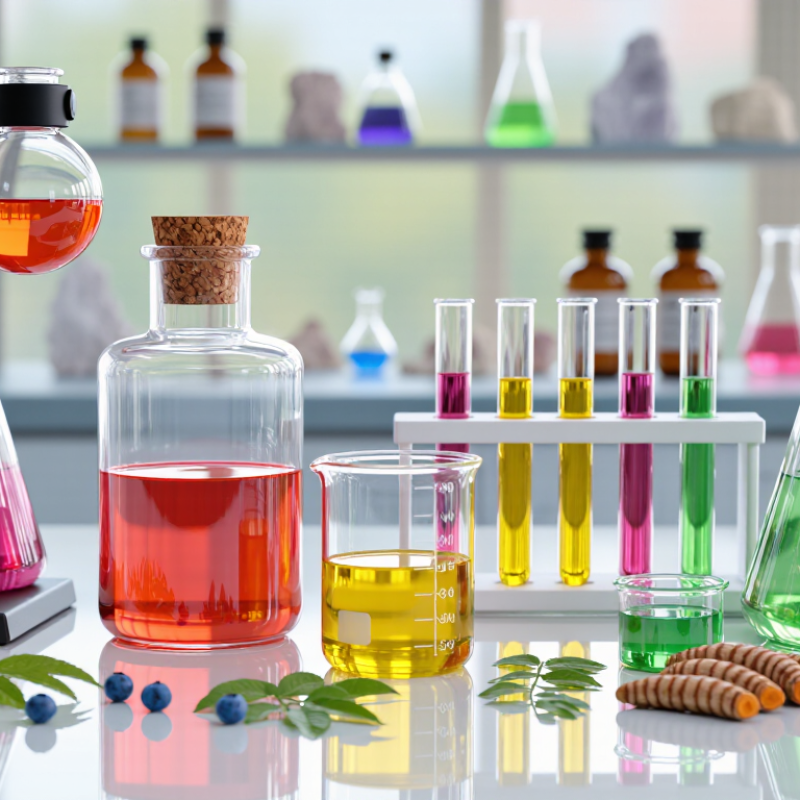
2026 How to Choose Water Soluble Plant Pigments?

Classify Pigments by Chemistry: Anthocyanins, Betalains, and Carotenoids

Choosing water-soluble plant pigments starts with chemistry, not appearance. Anthocyanins create red, purple, and blue shades in berries, purple cabbage, and black rice. Their color changes with pH, oxygen, heat, and metal ions. Acidic drinks often preserve brighter red tones. Neutral formulas can look dull or unexpectedly violet. A 2024 market analysis by Grand View Research estimated the global natural food colors market at approximately USD 1.7 billion in 2023, reflecting stronger demand for recognizable botanical sources.

Betalains provide vivid red-violet or yellow shades from beetroot and related plants. They dissolve well in water, but heat and oxygen can reduce stability. Carotenoids deliver yellow, orange, and red tones, yet they are naturally oil-soluble. Water-based products need emulsification, encapsulation, or another dispersion method. This difference is frequently overlooked. A 2023 industry report by MarketsandMarkets projected continued growth in natural color demand through 2028, driven partly by clean-label product development. Still, market forecasts are not laboratory evidence. I would test each pigment in the final formula, not only in water. Check pH, light exposure, processing temperature, and storage time. Short trials can mislead. A clear sample may fade after two weeks. A slightly imperfect shade may remain more stable and practical.

Compare pH Stability: Anthocyanins at pH 2–4 and Betalains at pH 4–6

2026 How to Choose Water Soluble Plant Pigments?

pH is the first practical filter. Anthocyanins usually deliver clearer red shades between pH 2 and 4. Their color can shift toward purple as pH rises. A review in Food Chemistry reports that anthocyanins become less stable under neutral and alkaline conditions. This explains why a red drink may look bright at pH 2.8, then dull after dilution. The boundary is not perfectly clean. Source, temperature, oxygen, and metal ions also matter.

Betalains often perform better between pH 4 and 6. Technical studies in the Journal of Agricultural and Food Chemistry describe strongest stability near mildly acidic conditions, especially when heat and light are controlled. A 2023 food-coloring review also identifies pH, oxygen, and processing temperature as major degradation factors.

In practical screening, compare samples at pH 3.0, 4.5, and 6.0. Check color after 24 and 48 hours, both under light and in darkness. A simple glass vial can reveal changes that a color chart misses.

Keep the test imperfect but honest. Anthocyanins may win in a sharp berry-red formula, while betalains may hold a warmer red at pH 4–6. Neither pigment is universally better.

Assess Heat and Light Tolerance: Target ≤5% Color Loss in Testing

2026 How to Choose Water Soluble Plant Pigments?

Heat and light tolerance should be tested before judging pigment quality. A bright sample can still fail after one afternoon near a window. ASTM G154 supports controlled ultraviolet exposure, while ISO 105-A02 provides a practical visual scale for color change. Use both methods when possible. Record the starting and final CIELAB values, especially ΔE00.

Set a clear acceptance limit: no more than 5% color loss after testing. This target should be measured against the pigment’s initial absorbance or color strength. For example, a solution with an absorbance of 1.00 should remain at least 0.95 after exposure. Test realistic conditions, such as 40–60°C processing and repeated light cycles. Keep pH, oxygen, container size, and concentration documented. Small differences matter.

Recent technical reviews in Food Chemistry identify anthocyanins as highly sensitive to heat, oxygen, and pH shifts. Curcumin-related pigments often show better heat resistance but can fade under prolonged light. Results vary widely. That is the uncomfortable part. One laboratory result may not predict a finished beverage, coating, or cosmetic formula. I would test the actual formula, not only the raw pigment. Include a dark control and an untreated control. Inspect the samples visually, too. Instruments can miss an unattractive brown shift. Recheck the 5% limit after storage, because early testing may look reassuring but remain incomplete.

Verify Safety and Compliance: Check E-Numbers, JECFA, FDA, and EU Limits

When choosing water-soluble plant pigments in 2026, verify the regulatory identity before comparing color strength. An E-number confirms recognition in the European Union, but it does not guarantee approval everywhere. For example, E100, E140, and E163 have different chemical sources, stability profiles, and permitted uses. Check the European Union additive database and Regulation (EC) No. 1333/2008 for category-specific limits, including “quantum satis” conditions.

JECFA evaluates additives through toxicological reviews and may assign an acceptable daily intake, expressed in milligrams per kilogram of body weight per day. The United States Food and Drug Administration uses separate color-additive listings under 21 CFR Parts 73, 74, and 82. Therefore, an ingredient with an E-number may still require different documentation for the United States. Recent food-additive assessments from the European Food Safety Authority also emphasize exposure estimates across age groups. Children can receive higher exposure per kilogram. That detail is easy to miss.

Tips: Request the exact pigment name, E-number, INS number, purity specification, and batch certificate. Compare the supplier’s proposed dosage with the legal limit for your food category. Check heavy metals, solvents, microbiological results, and allergen statements. Do not rely on “natural” wording alone. It sounds reassuring, but it proves little. I would also recheck regulations before launch, because permitted uses and exposure conclusions can change.

2026 How to Choose Water Soluble Plant Pigments? – Verify Safety and Compliance: Check E-Numbers, JECFA, FDA, and EU Limits

Pigment / Colour E-Number / INS Common Botanical Source Water-Solubility Profile JECFA ADI FDA Compliance Check EU Compliance Check Selection and Verification Notes
Curcumin E100 / INS 100(i) Turmeric rhizome (Curcuma longa) Naturally poorly soluble in water at neutral pH. Water-dispersible or emulsified preparations require formulation support. 0–3 mg/kg body weight per day, expressed as curcumin. Confirm that the material meets the applicable FDA color-additive specifications for turmeric or turmeric oleoresin under 21 CFR 73.600. Food-use authorization is formulation- and use-specific. E100 is authorized in the EU for specified food categories. “Quantum satis” applies only where listed and does not remove the requirement for good manufacturing practice. Use only a validated water-dispersible grade when clear beverages or aqueous systems are required. Check pH, light stability, and the final curcumin intake.
Beetroot Red / Betanin E162 / INS 162 Red beet (Beta vulgaris) Generally water-soluble or readily water-dispersible. Colour is sensitive to heat, oxygen, light, and prolonged high-pH exposure. ADI not specified. Verify the exact source and composition against the applicable FDA exemption for certification requirements, such as permitted beet-derived colour preparations. Do not assume that every betanin concentrate is covered. E162 is authorized for specified food uses, commonly under quantum satis where listed. Confirm the food category in the current EU additives database and Annex II conditions. A strong candidate for aqueous foods and beverages. Request specifications for betanin content, nitrate levels, microbiology, residual solvents, and stability in the intended matrix.
Anthocyanins E163 / INS 163 Grape skin, purple corn, berries, black carrot, and other pigmented fruits or vegetables Water-soluble pigments. Colour changes with pH: red in acidic systems, purple near neutral pH, and less stable in alkaline conditions. ADI not specified for anthocyanins as a food-colour group. FDA status depends on the botanical source and preparation. For example, grape colour extract is listed as a colour additive exempt from certification under 21 CFR 73.170. Generic anthocyanin approval should not be assumed. E163 is authorized only in specified food categories. Check the current category-specific conditions, including any maximum level or quantum satis requirement. Best suited to acidic beverages, confectionery, sauces, and fruit preparations. Test colour performance at the product’s actual pH, temperature, oxygen exposure, and shelf life.
Chlorophylls E140 / INS 140 Green leaves and plant materials Native chlorophylls are poorly soluble in water and are usually oil-associated. Water-compatible products may use specially prepared dispersions or different chlorophyll derivatives. ADI not specified. Review the exact chemical identity. FDA authorization for a chlorophyll-derived colour, such as sodium copper chlorophyllin, should not be extended automatically to native chlorophyll or another derivative. E140 and related chlorophyll derivatives have separate identities and conditions. Verify the precise E-number, purity requirements, and permitted food category before use. Do not select native chlorophyll solely because it is plant-derived. Confirm dispersion, copper or other mineral content where applicable, colour stability, and the correct regulatory identity.
Sodium Copper Chlorophyllin E141(ii) / INS 141(ii) Derived from chlorophyll-containing plant material Water-soluble copper complex; generally more suitable for aqueous products than native chlorophyll. JECFA ADI for chlorophyllins, copper complexes: 0–15 mg/kg body weight per day. Check the specifications and permitted use for chlorophyllin copper complex under 21 CFR 73.530. Confirm that the product identity and composition match the listed substance. E141(ii) has distinct EU conditions from E140. Verify the permitted category, maximum level or quantum satis status, and purity criteria in the current legislation. Useful where water solubility is essential, but copper content must be included in the safety assessment and total dietary exposure calculation.
Regulatory verification note: E-numbers, JECFA ADIs, FDA colour-additive listings, and EU permissions are not interchangeable. Final compliance depends on the exact chemical identity, botanical source, specifications, manufacturing process, food category, use level, and applicable national legislation. “Quantum satis” means the amount needed to achieve the intended technical effect in accordance with good manufacturing practice; it is not an unlimited dosage authorization.
Key references: Joint FAO/WHO Expert Committee on Food Additives (JECFA) evaluations; U.S. FDA color-additive regulations in Title 21 CFR Part 73; European Union Regulation (EC) No 1333/2008 and its current Annex II amendments.

Build a 2026 Selection Matrix: Solubility, Hue, Cost, and ΔE00 <3

2026 How to Choose Water Soluble Plant Pigments?

A practical selection matrix should score solubility, hue, cost, and colour difference. ISO 11664-4 defines CIELAB measurement conditions, while CIEDE2000 provides a more perceptual comparison. For production, set ΔE00 below 3 against an approved reference. That threshold is useful, but not universal.

Test each pigment in the real formula. Anthocyanins may appear red in acid conditions and purple or blue near neutral pH. Betalains can lose strength during heating. Curcumin offers a bright yellow hue, yet its water performance often needs careful dispersion control. A 2024 market analysis estimated the natural colourants sector could grow at over 7% annually through 2030, increasing demand for stable plant-based options. However, market growth does not guarantee batch consistency.

Record solubility as grams dissolved per 100 millilitres, not simply “water soluble.” Calculate cost per usable kilogram after filtration, adjustment, and rejected batches. Measure ΔE00 using the same light source, substrate, film thickness, and drying time. Small details matter.

Tips: Build a weighted matrix: solubility 30%, hue stability 25%, ΔE00 25%, and cost 20%. Keep the numbers visible. A pilot batch may expose weaknesses that laboratory water tests miss. I have found that a lower-cost pigment can become expensive after repeated pH correction. That assumption deserves review.

FAQS

What are the main types of water-soluble plant pigments?

Anthocyanins create red, purple, and blue shades. Betalains provide red-violet and yellow tones. Carotenoids produce yellow, orange, and red shades. Carotenoids are naturally oil-soluble. Water-based formulas need emulsification or another dispersion method.

Which pigment works best for acidic red formulas?

Anthocyanins often perform well between pH 2 and 4. They can produce a bright berry-red appearance. At higher pH, the color may shift toward purple. A drink at pH 2.8 may look brighter than a diluted sample. The boundary is not perfect.

When are betalains a practical choice?

Betalains often perform better between pH 4 and 6. They can create warm red shades in mildly acidic formulas. Heat, oxygen, and light may reduce their stability. A covered sample may retain color longer than an exposed one. Still, results vary.

How should pigment stability be tested?

Test the pigment in the final formula, not only in water. Prepare samples at pH 3.0, 4.5, and 6.0. Check them after 24 and 48 hours. Store some samples under light and others in darkness. Use clear glass vials. A color chart may miss gradual fading.

Can a clear pigment sample remain stable during storage?

Yes, but a short test can give false confidence. A clear sample may fade after two weeks. Check color after longer storage periods. Record temperature, light exposure, oxygen contact, and processing heat. A slightly imperfect shade may prove more practical.

Why are carotenoids difficult in water-based products?

Carotenoids naturally dissolve in oil rather than water. They may require emulsification, encapsulation, or another dispersion technique. Without proper dispersion, color can separate or appear uneven. Small droplets may settle during storage. That detail matters.

Does “natural” automatically mean safe and approved?

No. Verify the exact pigment identity, permitted use, and dosage limits. Requirements can differ between regions and food categories. Check current official additive records before launch. Regulatory status may change. Natural wording alone proves little.

What documents should be requested from a pigment supplier?

Request the exact pigment name, identification number, purity specification, and batch certificate. Also request heavy-metal results, solvent information, microbiological data, and allergen statements. Compare the proposed dosage with the applicable legal limit. Review exposure for children and other sensitive groups. I would recheck every document. Errors happen.

Conclusion

Choosing Water-Soluble Plant Pigments in 2026 requires evaluating both chemical behavior and application performance. Anthocyanins provide red, purple, and blue shades but are most stable in acidic systems, typically around pH 2–4. Betalains offer vibrant red to yellow tones and generally perform better at pH 4–6. Carotenoids can deliver yellow, orange, and red hues, although they are naturally oil-soluble and may require suitable water-dispersible processing for aqueous products.

A practical selection process should compare solubility, target hue, cost, and formulation compatibility. Heat and light resistance should be tested under real processing and storage conditions, with a target of no more than 5% color loss. Safety and regulatory review is also essential, including verification of applicable E-numbers, JECFA evaluations, FDA requirements, and EU limits. A 2026 selection matrix can combine these factors with color-difference testing, aiming for a ΔE00 below 3 to support consistent and visually acceptable results.

Ethan

Ethan

Ethan is a dedicated marketing professional with a deep expertise in the company's core products and services. With a passion for conveying complex concepts in an engaging manner, he frequently updates the company’s professional blog, ensuring that clients and partners stay informed about the......