
Industry Insights & Botanical Science
Discover technical research, ingredient innovations, and global health market trends from ISN Biotech Co., Ltd.
7 Best Clean Label Botanical Antioxidants for Global Buyers?
Table of Contents
- What Clean-Label Botanical Antioxidants Are and Why They Matter
- How Global Buyers Should Evaluate Botanical Antioxidant Quality
- Seven Leading Botanical Antioxidants for Clean-Label Formulations
- Comparing Botanical Sources by Benefits, Stability, and Applications
- Sourcing, Regulatory, and Labeling Considerations for International Buyers
- FAQS
- Conclusion
- Related Posts
Clean-Label Botanical Antioxidants are moving from specialist shelves into mainstream food, beverage, and supplement development. Buyers now examine more than antioxidant capacity. They want recognizable plant sources, traceable cultivation, stable formulations, and clear labeling. The opportunity is growing, but the category is not perfectly defined. That weakness matters.
Grand View Research estimates the global antioxidants market could expand at about 6.8% annually from 2024 to 2030. Its analysis also highlights food, beverages, and dietary supplements as important application areas. Innova Market Insights’ 2024 global trends reporting points to continued consumer interest in natural, plant-based, and minimally processed ingredients. These reports indicate commercial momentum, not automatic product quality. Laboratory performance still needs context.
Dr. David L. Katz, physician and nutrition researcher, often expresses the food-first principle simply: “Food is medicine.” This idea supports botanical sourcing, but it does not replace safety assessment or human evidence. A bright green powder may look convincing in a sample jar. Its origin, extraction solvent, active-marker level, and shelf stability require closer inspection. Claims can also become careless when “natural” is treated as synonymous with “effective.”
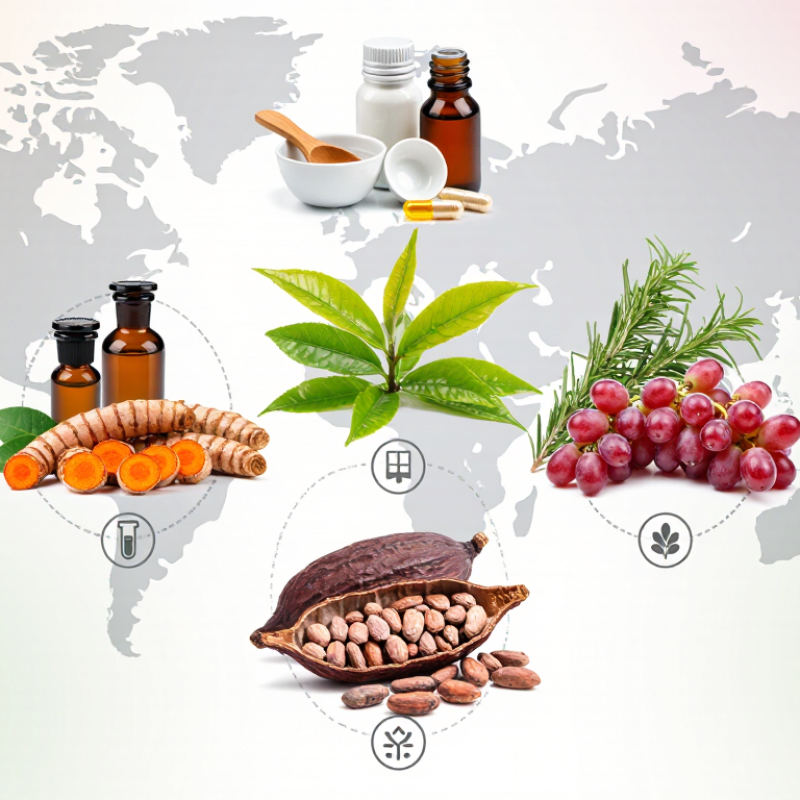
This guide reviews seven Clean-Label Botanical Antioxidants for global buyers. Each option is considered through practical purchasing questions: botanical identity, evidence quality, supply continuity, sensory impact, documentation, and regulatory suitability. Some ingredients will perform better in oils. Others suit beverages or powdered blends. No single botanical wins every application. Good sourcing remains a process of comparison, verification, and occasional reconsideration.
What Clean-Label Botanical Antioxidants Are and Why They Matter
Clean-label botanical antioxidants are plant-derived ingredients used to help protect foods, supplements, and personal-care formulas from oxidation. Buyers often examine green tea, rosemary, grape seed, turmeric, olive leaf, acerola, and pomegranate extracts. “Botanical” describes the source, while “clean-label” usually signals recognizable ingredients, limited processing aids, and transparent documentation. It does not automatically mean organic, allergen-free, or suitable for every market.
Why do they matter? Oxidation can affect color, aroma, texture, and shelf stability. A carefully selected extract may help maintain product quality while supporting a simpler ingredient story. However, performance depends on the plant variety, harvest conditions, extraction method, carrier, and dosage. I have seen attractive specifications fail during real formulation trials. That is an uncomfortable reminder: marketing language cannot replace testing.
Reliable suppliers should provide identity testing, contaminant screening, stability data, traceability, and region-specific compliance documents. Buyers should also check whether the claimed antioxidant activity reflects the finished product, not only a laboratory assay.
Tips: Request a recent certificate of analysis and a clear botanical name. Compare active-marker levels, not just extract ratios.
Test the ingredient in your actual formula, packaging, and storage conditions. Ask about country of origin and processing aids.
Small details matter. A natural-looking label may still hide supply risks, inconsistent potency, or an unsuitable regulatory position.
How Global Buyers Should Evaluate Botanical Antioxidant Quality
Global buyers should evaluate botanical antioxidants beyond clean-label language. “Natural” does not automatically mean consistent, safe, or effective. The strongest candidates often include rosemary extract, green tea extract, grape seed extract, acerola, turmeric, olive leaf, and grape skin compounds. Each has a different marker profile and oxidation behavior.
Ask for the exact botanical species, plant part, origin, harvest period, and extraction method. Review the certificate of analysis carefully. It should show active markers, microbiological limits, heavy metals, pesticides, residual solvents, and identity testing. HPLC or comparable methods can support stronger verification. A polished certificate is not enough. Independent testing may reveal variation between batches.
Stability data matters during global shipping. Check performance under heat, light, humidity, and common food-processing conditions. Packaging should protect sensitive extracts from oxygen and moisture. Traceability should connect the finished powder to a documented raw-material lot. Suppliers should also explain allergen controls and their quality system. Local regulations may define “clean label” differently, so marketing language needs careful review. Some buyers focus too heavily on a low price. That can be a costly shortcut. I would also question claims that sound perfect. Botanical materials are biological, and small differences are normal. The real test is whether the supplier measures, explains, and manages those differences consistently.
7 Best Clean Label Botanical Antioxidants for Global Buyers
Typical marker-compound specification levels used when evaluating standardized botanical antioxidant extracts
Seven Leading Botanical Antioxidants for Clean-Label Formulations
Clean-label buyers often seek recognizable botanical ingredients with clear technical purpose. Seven leading options include green tea catechins, rosemary extract, grape seed oligomeric proanthocyanidins, turmeric curcuminoids, olive leaf oleuropein, milk thistle silymarin, and pomegranate ellagitannins. Each offers a different antioxidant profile, color, taste, and processing response. Green tea may suit beverages, while rosemary extract often performs well in oil-based systems. Grape seed and pomegranate extracts can support powder or capsule concepts. However, “natural” does not guarantee easy formulation.
Experience matters here. Turmeric can create strong color and sediment, especially in transparent drinks. Olive leaf may bring noticeable bitterness. Milk thistle extracts can require careful dispersion testing. Buyers should request botanical identity, extraction method, marker compounds, residual solvent data, microbiological results, and stability records. Supplier documentation should match the destination market. Regulations differ across regions, and permitted claims must be reviewed locally. No extract is universally best. That is worth remembering.
Tips: Compare samples in the final formula, not only in water. Check odor after heating and storage. Test light, oxygen, and pH exposure. Ask whether carriers, preservatives, or flow agents are included. A clean label can become less convincing when supporting ingredients remain unexplained. Small pilot batches often reveal problems earlier. Results may still vary between harvests, so define acceptance ranges instead of relying on one perfect sample.
7 Best Clean Label Botanical Antioxidants for Global Buyers?
| Botanical Antioxidant | Typical Plant Part | Principal Antioxidant Compounds | Common Clean-Label Applications | Formulation Advantages | Key Formulation Considerations | Global Buyer Checklist |
|---|---|---|---|---|---|---|
| Green Tea Camellia sinensis |
Leaves and leaf buds | Catechins, including epigallocatechin gallate, epicatechin gallate, epigallocatechin, and epicatechin | Beverages, powdered drink mixes, nutrition products, dairy alternatives, and functional foods | Widely recognized botanical source; available as water-based, powdered, and standardized extracts | May contribute bitterness, astringency, color, and caffeine unless decaffeinated material is selected | Confirm caffeine level, solvent system, pesticide limits, heavy metals, and permitted food-use status in each target market |
| Rosemary Salvia rosmarinus |
Leaves | Carnosic acid, carnosol, and rosmarinic acid | Oils, meat and poultry products, savory foods, dressings, snacks, and lipid-containing formulations | Particularly suitable for protecting fats and oils from oxidation; supports a recognizable botanical positioning | Flavor and aroma intensity can vary; extract color and polarity should match the food matrix | Check whether the local label permits a rosemary extract or requires a different additive or ingredient declaration |
| Turmeric Curcuma longa |
Rhizomes | Curcuminoids, mainly curcumin, demethoxycurcumin, and bisdemethoxycurcumin | Spiced beverages, nutrition powders, sauces, soups, bakery products, and golden-color foods | Provides antioxidant compounds together with a naturally derived yellow-orange color | Poor water solubility; can stain equipment and packaging and may require dispersion or emulsification support | Verify curcuminoid assay, residual solvent profile, adulteration testing, contaminants, and market-specific use conditions |
| Grape Seed Vitis vinifera |
Seeds | Oligomeric proanthocyanidins, catechin, epicatechin, and phenolic acids | Nutrition powders, capsules, functional beverages, snack products, and polyphenol blends | Strong polyphenol-focused positioning and useful compatibility with dry blends and solid dosage formats | Can produce astringency; particle size, extract color, and dispersibility affect consumer experience | Request proanthocyanidin assay, grape-origin documentation, allergen controls, and contaminant specifications |
| Olive Leaf Olea europaea |
Leaves | Oleuropein, hydroxytyrosol, tyrosol, and verbascoside | Herbal beverages, nutrition products, botanical blends, and Mediterranean-style foods | Distinctive Mediterranean sourcing story and a clearly identifiable phenolic marker compound | May have pronounced bitterness; oleuropein content varies with cultivar, harvest timing, and extraction process | Check botanical identity, oleuropein specification, agricultural residues, microbiology, and permitted claims by jurisdiction |
| Acerola Malpighia emarginata |
Fruit | Ascorbic acid, anthocyanins, carotenoids, and polyphenols | Fruit powders, smoothies, beverages, confectionery, nutrition products, and vitamin-fortified foods | Fruit-based ingredient story; supplies naturally occurring vitamin C along with other fruit compounds | Vitamin C is sensitive to heat, oxygen, light, and moisture; acidity and fruit flavor may affect the final product | Confirm vitamin C assay at release and end of shelf life, carrier ingredients, drying method, and nutrition-label requirements |
| Pomegranate Punica granatum |
Fruit peel, arils, and juice | Ellagitannins, punicalagins, anthocyanins, ellagic acid, and other polyphenols | Fruit beverages, concentrates, nutrition powders, dairy alternatives, bars, and functional foods | Strong fruit-based identity and compatibility with antioxidant-focused beverage and nutrition concepts | Tannins may create astringency; anthocyanin color is affected by pH, light, oxygen, and processing temperature | Define the approved plant part, verify punicalagin or total polyphenol content, and review novel-food and additive rules locally |
Note: Specifications, permitted uses, labeling terminology, health claims, and maximum levels can differ by country. Buyers should confirm current requirements with the relevant local authority and request a complete certificate of analysis for each lot.
Comparing Botanical Sources by Benefits, Stability, and Applications
7 Best Clean Label Botanical Antioxidants for Global Buyers?
Comparing Botanical Sources by Benefits, Stability, and Applications
Global buyers often compare botanical antioxidants by more than antioxidant capacity. They also examine stability, taste, sourcing records, and application fit. Green tea extract suits beverages and capsules, offering catechins with a noticeable astringent note. Rosemary extract performs well in oils and savory foods, especially where heat resistance matters. Grape seed extract provides proanthocyanidins, but its bitterness can challenge drink formulations. No source is perfect.
Turmeric extract brings strong color and curcuminoids, yet light and dispersion require careful control. Acerola offers natural vitamin C and works well in powders, gummies, and functional drinks. Pomegranate extract supports polyphenol-focused formulas, though its color may shift with pH. Olive leaf extract fits capsules and wellness powders, with oleuropein levels varying by harvest and processing. Stability depends on the complete formula, not only the plant.
Experienced buyers should request botanical identity testing, active-compound assays, microbiological results, and contaminant screening. Shelf-life data should reflect real packaging and storage conditions. A clean label also needs a clear definition; it may exclude synthetic carriers, or simply emphasize recognizable ingredients. This point needs review.
Suppliers should align claims with local regulations. “Antioxidant” does not automatically permit disease-related language. In practice, small formulation trials reveal more than a specification sheet. Flavour, sedimentation, moisture, and oxidation can change purchasing decisions. Careful comparison remains essential.
Sourcing, Regulatory, and Labeling Considerations for International Buyers
For international buyers, the strongest clean-label botanical antioxidants are rosemary, green tea, grape seed, turmeric, amla, acerola, and olive leaf. “Best” depends on market, application, stability, and permitted claims. Rosemary extract often suits oils and savory foods, while green tea and grape seed provide familiar consumer recognition. Amla and acerola may support fruit-based positioning, but their color and acidity can affect finished products.
Sourcing requires more than checking an attractive specification sheet. Request botanical identity testing, harvest origin, extraction details, carrier ingredients, pesticide results, heavy-metal analysis, and microbiological limits. Confirm whether the supplier can provide batch-level certificates. Review solvent residues carefully. They can complicate clean-label positioning. Storage conditions matter too; heat, light, and oxygen may reduce activity before production.
Regulatory review must be country-specific. An ingredient accepted in one market may require authorization elsewhere. Check positive lists, novel-food rules, maximum use levels, allergen statements, and required language. Do not assume “natural antioxidant” is acceptable wording. Some jurisdictions permit only nutrition claims supported by defined analytical values. Label the botanical name, plant part, extract ratio, and standardization when required. “Clean label” has no universal legal definition. It sounds clear, but it is not. Even experienced buyers can overlook carrier substances or changing local guidance, so qualified regulatory review remains essential.
FAQS
No. Natural materials can vary by species, plant part, origin, harvest period, and extraction method. Not automatically. Consistency depends on testing and process control.
Ask for the exact botanical species, plant part, country of origin, harvest period, and extraction method. Request the extract ratio and standardization details when available. Small omissions can create large misunderstandings.
Check active markers, identity testing, microbiological limits, heavy metals, pesticides, and residual solvents. Batch-level results are more useful than a general specification sheet. A polished certificate is not proof enough.
It can reveal differences between batches, even when supplier documents appear complete. Use HPLC or comparable methods to verify important markers. One test cannot answer everything.
Request data for heat, light, humidity, oxygen exposure, and normal food-processing conditions. Packaging should limit moisture and oxygen entry. Storage details matter.
The finished powder should connect to a documented raw-material lot. Suppliers should explain allergen controls, storage conditions, and their quality system. Traceability makes investigations faster.
No. “Clean label” has no universal legal definition. Review local positive lists, novel-food rules, maximum use levels, allergen statements, and required language. Marketing wording may need correction.
Match the botanical to the market, product format, stability needs, and permitted claims. Rosemary may suit oils and savory foods. Green tea and grape seed offer familiar consumer recognition. Fruit-based extracts may affect color and acidity. The cheapest option may become expensive later.
Conclusion
Clean-Label Botanical Antioxidants are plant-derived ingredients used to help protect foods, beverages, supplements, and personal care products from oxidation while supporting simpler, more transparent labeling. This overview explains what makes an antioxidant “clean label,” including recognizable botanical origins, minimal processing aids, responsible sourcing, and clear documentation. It highlights seven useful options—rosemary, green tea, grape seed, turmeric, olive leaf, cocoa, and acerola—while comparing their antioxidant profiles, flavor impact, color, stability, and suitability for different formulations.
For global buyers, selecting the right botanical requires more than comparing potency. Quality assessment should include botanical identity, extraction method, active-compound consistency, contaminant testing, shelf-life data, and compatibility with the final product. Buyers should also review supply reliability, traceability, allergen information, permitted claims, and country-specific requirements for ingredients, labeling, and import documentation. A well-qualified supplier and thorough technical review can help ensure that botanical antioxidants deliver reliable performance while meeting clean-label expectations across international markets.

Blog Tags: