
Industry Insights & Botanical Science
Discover technical research, ingredient innovations, and global health market trends from ISN Biotech Co., Ltd.
How to Source Organic Acai Berry Powder in Bulk
Table of Contents
- Understanding Organic Acai Berry Powder and Its Bulk Uses
- Defining Quality, Certification, and Sourcing Requirements
- Finding and Comparing Reliable Bulk Acai Powder Suppliers
- Evaluating Samples, Pricing, Packaging, and Supply Capacity
- Managing Orders, Import Procedures, Storage, and Quality Control
- FAQS
- Conclusion
- Related Posts
Sourcing Organic Acai Berry Powder in bulk requires more than comparing prices. The powder’s origin, processing method, certification, and storage history can affect every shipment. Grand View Research estimated the global acai berry market at approximately US$712.9 million in 2023, with double-digit growth projected through 2030. These figures suggest strong demand, but market growth does not guarantee consistent quality.
In practice, serious buyers should examine suppliers connected to Brazil’s Amazon region, especially Pará, where acai production is concentrated. A supplier should provide a current organic certificate, product specification, allergen statement, and lot-specific Certificate of Analysis. Check moisture, microbiological limits, pesticide residues, heavy metals, and foreign matter. Freeze-dried powder may preserve color and flavor better, while spray-dried products can offer different cost and solubility profiles. Neither option is automatically superior.
Small details matter. A sealed 20-kilogram bag should show the lot number, production date, country of origin, and storage instructions. CBI market research identifies traceability, certified organic status, and reliable documentation as important considerations for European natural-ingredient buyers. USDA organic requirements and EU organic rules also require careful certification checks, depending on the destination market. Ask difficult questions early. No supplier scorecard is perfect. Even a polished sample may hide seasonal variation, weak packaging, or delayed laboratory testing. A responsible sourcing process combines verified documents, independent testing, sample evaluation, and clear contract terms. That approach helps buyers secure authentic Organic Acai Berry Powder without treating sustainability claims as automatic proof.
Understanding Organic Acai Berry Powder and Its Bulk Uses
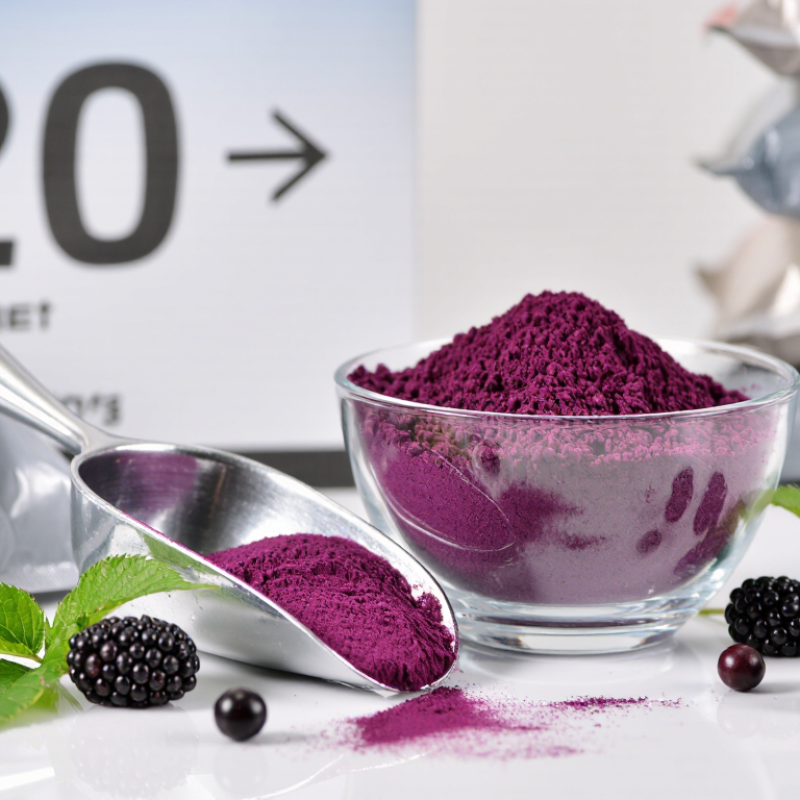
Organic acai berry powder is made from acai pulp that is dried and milled into a fine ingredient.
It has a deep purple color and a tart, earthy flavor. However, color alone does not prove quality. Natural batches can vary with harvest conditions, drying methods, and storage time.
Bulk buyers should review the organic certificate, product specification, certificate of analysis, and lot traceability records. Testing should cover moisture, microbiological safety, pesticide residues, and heavy metals. Ask about the drying temperature too. Excessive heat may affect flavor and color.
Bulk acai powder suits smoothie blends, yogurt toppings, bakery mixes, drink sachets, and powdered food formulations. It can also add visual appeal to granola or dessert coatings.
A practical supplier should offer consistent mesh size, clear allergen information, and packaging suited to long-distance transport. Moisture is a quiet problem. Use sealed, food-grade bags with protective liners, then store them in a cool, dry area away from light.
Smaller trial orders can reveal mixing behavior before a full purchase. This step costs more time, but it may prevent expensive waste.
One detail deserves reflection: “organic” does not automatically mean perfect taste, uniform color, or unlimited shelf life. Seasonal variation remains real. Good sourcing balances certification, sensory performance, testing, and realistic expectations.
Defining Quality, Certification, and Sourcing Requirements
How to Source Organic Acai Berry Powder in Bulk
Quality begins with a clear specification, not a supplier’s attractive photograph. Define moisture, particle size, color, aroma, solubility, and acceptable microbial limits before requesting quotations. Acai powder should show a natural purple tone, without a burnt smell or excessive clumping. Ask for batch-specific certificates of analysis covering pathogens, yeast, mold, heavy metals, pesticides, and moisture. Anthocyanin content can support comparison, but testing methods differ. I would not compare numbers without checking the laboratory method.
Certification must match the destination market. Request a current organic certificate, scope of certification, transaction documents, and traceability records from harvest through drying and packing. The FiBL and IFOAM Organics Europe report valued global organic retail sales at approximately €135 billion in 2022. The Organic Trade Association reported U.S. organic sales of $67.6 billion in 2023. These figures show strong demand, but they do not prove every powder is genuinely organic. That distinction matters.
Tips: Keep a retained sample from every approved lot. Test an independent sample before payment. Confirm whether the powder is freeze-dried or spray-dried, because processing can change color and nutrient retention. Request harvest-region details and storage conditions. A low price may reflect efficient logistics, or weaker testing. I have seen buyers focus too heavily on certification logos. That can be a mistake. Verify the certificate directly, and review three recent batch records before signing a bulk agreement.
How to Source Organic Acai Berry Powder in Bulk: Certification Requirements
The chart compares the minimum percentage of organic agricultural ingredients required for major organic labeling categories. Under USDA Organic rules, “100% Organic” requires 100% organic ingredients, “Organic” requires at least 95%, and “Made with Organic” requires at least 70%. EU organic products generally require at least 95% organic agricultural ingredients. When sourcing bulk acai berry powder, request the applicable organic certificate, verify the certification scope, and confirm that the certificate covers the product and processing facility.
Reference frameworks: USDA National Organic Program (7 CFR Part 205) and EU Organic Regulation (EU) 2018/848.
Finding and Comparing Reliable Bulk Acai Powder Suppliers
Finding a reliable bulk acai powder supplier requires more than comparing prices. I examine the product’s origin, harvest records, and processing conditions. A trustworthy supplier should provide current organic certification and a clear chain of custody. Ask whether the berries are freeze-dried or spray-dried. These methods can affect color, flavor, nutrients, and solubility. I also request a recent certificate of analysis covering moisture, microbiological safety, heavy metals, and pesticide residues.
Samples reveal details that documents may miss. Check the powder’s aroma, purple color, texture, and performance in water or smoothies. Compare samples from several suppliers under identical conditions. Review minimum order quantities, lead times, packaging, and storage recommendations. A dependable supplier answers technical questions directly and explains quality failures instead of hiding them. Low prices can be useful, but they may exclude testing, freight, or protective packaging. Read every quotation carefully.
Tips: Request a sealed sample and an independent test when possible. Confirm lot numbers match the certificate of analysis. Ask how temperature and humidity are controlled during storage and transport. Keep a small retained sample from each shipment for future comparison. I once focused too heavily on appearance and overlooked inconsistent delivery dates. That mistake affected production planning. Supplier evaluation should include communication, documentation, and actual service—not only the powder’s color.
Evaluating Samples, Pricing, Packaging, and Supply Capacity
Bulk sourcing starts with a sample, not a spreadsheet.
Request two production lots from different dates. Check color, aroma, solubility, moisture, water activity, and particle size. An independent laboratory should test pathogens, heavy metals, pesticide residues, and authenticity. Ask for organic certificates, transaction records, and laboratory methods. A beautiful purple sample proves very little.
Pricing must be compared on the same basis.
Calculate the landed cost per kilogram, including certification, testing, freight, duty, and packaging. FiBL and IFOAM Organics International reported that global organic sales reached €134.8 billion in 2022. Demand is substantial, but organic supply still requires careful verification. A low quotation may exclude testing or seasonal freight. I have seen spreadsheets look convincing until customs charges appear.
Packaging needs equal attention.
Use food-grade, oxygen- and moisture-barrier bags inside durable cartons. Ask whether nitrogen flushing is validated, rather than assuming it protects every shipment. UNEP’s Food Waste Index Report 2024 estimated 1.05 billion tonnes of food waste in 2022, making loss prevention commercially important. Confirm minimum order quantities, harvest months, monthly output, lead times, and backup processing capacity. Request three recent batch records. Capacity claims are not capacity evidence. My own weak point is accepting optimistic forecasts too early; a conservative supply plan may cost more, but it protects continuity.
Managing Orders, Import Procedures, Storage, and Quality Control
How to Source Organic Acai Berry Powder in Bulk
Managing a bulk order starts with clear specifications. Define the required organic certification, powder mesh, moisture limit, packaging size, and expected monthly volume. Ask suppliers for recent certificates, batch records, allergen statements, and independent laboratory results. Samples should match the final contract, not just the sales sample. Keep every document in one traceable file.
Import procedures need careful coordination. Confirm the product’s tariff classification, labeling rules, and destination-country organic requirements before shipment. Request a commercial invoice, packing list, certificate of origin, and applicable inspection documents. Use a customs broker familiar with food ingredients. Small errors can delay a container for days. Build extra time into the purchase schedule.
Storage conditions protect quality after arrival. Keep sealed bags in a cool, dry warehouse, away from sunlight, chemicals, and strong odors. Use pallets, not bare floors. Record temperature, humidity, lot numbers, and opening dates. Inspect each delivery for damaged packaging, unusual color, clumping, or fermented odors. Retain samples from every batch for comparison. No system is perfect. A missed humidity reading can still affect texture and flavor, so review procedures regularly and correct weak points quickly.
How to Source Organic Acai Berry Powder in Bulk - Managing Orders, Import Procedures, Storage, and Quality Control
| Data Dimension | Recommended Specification or Practice | Typical Planning Data | Documents or Evidence | Control Point |
|---|---|---|---|---|
| Product identity | Organic acai berry powder made from processed acai fruit, with the ingredient name, country of origin, lot number, and processing date clearly identified. | 100% acai fruit powder unless a different formulation is specifically approved. | Product specification, technical data sheet, ingredient statement, and certificate of analysis. | Confirm that the physical product matches the approved specification before placing a purchase order. |
| Organic status | Use an organic certificate issued by an accredited certification body and verify that its scope covers the product, processor, and relevant transaction. | Certificate validity should cover the shipment date and the intended market. | Current organic certificate, transaction certificate where applicable, and certificate-scope details. | Check certificate number, validity dates, product category, facility address, and certification scope. |
| Order quantity | Set the order quantity according to forecast demand, minimum order quantity, shelf life, storage capacity, and cash-flow limits. | Common bulk pack sizes include 10 kg, 20 kg, and 25 kg; the final pack size depends on the supplier and market. | Purchase order, approved quotation, packaging configuration, and pallet plan. | Compare forecast consumption with remaining shelf life to avoid over-ordering. |
| Purchase order controls | State product name, organic status, quantity, unit price, Incoterm, packaging, labeling, lot identification, delivery window, and testing requirements. | Allow separate approval for specification changes, substitute ingredients, and packaging changes. | Signed purchase order, sales contract, product specification, and change-control record. | Do not accept verbal changes that are not documented and approved. |
| Production lead time | Confirm raw-material availability, production scheduling, testing time, export preparation, and transport booking before committing to a delivery date. | A practical planning allowance is 4–8 weeks for production and release, plus transit time. | Production schedule, batch-release plan, dispatch notice, and transport booking. | Build safety stock around seasonal supply, port congestion, and customs delays. |
| Commercial invoice | The invoice should identify seller and buyer, product description, quantity, unit value, total value, currency, country of origin, and agreed delivery terms. | Values must be consistent with the purchase order, packing list, and customs declaration. | Commercial invoice and payment records. | Check that the description is specific enough for customs classification and food-import review. |
| Packing list | List the number of packages, net weight, gross weight, dimensions, pallet count, lot numbers, and package marks. | Net and gross weights should reconcile with the invoice and transport document. | Detailed packing list and palletization information. | Use the packing list during receiving to verify package count and lot segregation. |
| Transport documentation | Use the applicable bill of lading or air waybill and ensure the consignee, shipper, package count, and shipment references are correct. | Select transport based on urgency, total landed cost, product shelf life, and environmental exposure. | Bill of lading or air waybill, freight booking, and cargo insurance documents where applicable. | Track temperature, moisture exposure, transit delay, and package damage risks. |
| Customs classification | Confirm the correct Harmonized System classification with a licensed customs broker or the relevant customs authority before shipment. | Classification can vary according to product composition, processing method, and destination-country rules. | HS classification advice, customs entry, origin statement, and broker instructions. | Never rely solely on a classification supplied by an unrelated shipment or another jurisdiction. |
| Food-import compliance | Review destination-market requirements for importer registration, prior notice, food facility registration, labeling, pesticide residues, and organic claims. | Requirements differ by destination country and intended use, such as food, beverage, supplement, or cosmetic ingredient. | Import permit where required, regulatory registrations, label review, and compliance declarations. | Complete a destination-specific compliance checklist before dispatch. |
| Receiving inspection | Inspect outer packaging, seals, labels, lot numbers, odor, visible contamination, moisture damage, and evidence of pests. | Place damaged, wet, unsealed, or unidentified lots on hold pending investigation. | Receiving checklist, photographs, temperature or humidity records, and nonconformance report. | Record quantity received and maintain lot-level traceability. |
| Appearance and sensory quality | Powder should be free-flowing or consistent with the approved specification, with characteristic color and odor and no visible foreign matter. | Color may vary naturally by harvest, processing method, and formulation; acceptance limits should be predefined. | Approved sensory standard, inspection record, and representative sample. | Reject or investigate unexplained changes in color, odor, caking, or foreign material. |
| Moisture and water activity | Set moisture and water-activity limits appropriate to the validated product specification and packaging system. | Many dry powders are controlled at low water activity; the exact limit must be established by product testing rather than assumed. | Laboratory test report and calibrated instrument records. | Investigate high moisture, clumping, or seal failure because these may reduce stability. |
| Microbiological testing | Test according to the product risk assessment and destination-market requirements, including relevant pathogens and indicator organisms. | Acceptance limits must be defined by applicable food regulations and the intended application. | Lot-specific certificate of analysis from a competent laboratory. | Do not release a lot until required microbiological results are reviewed and approved. |
| Contaminant testing | Assess pesticide residues, heavy metals, mycotoxins, and other contaminants according to origin, processing, use, and regulatory risk. | Testing frequency should be risk-based, with increased testing after origin changes, deviations, or failed results. | Accredited laboratory reports, sampling plan, and corrective-action records. | Compare results with the strictest applicable legal and customer limits. |
| Identity and authenticity | Use appropriate identity testing to confirm the material is acai powder and to detect undeclared dilution or substitution when risk justifies it. | Apply enhanced verification to new suppliers, unusually low prices, or inconsistent analytical results. | Identity test report, reference sample, and supplier authenticity declaration. | Retain sealed reference samples from each received lot. |
| Storage conditions | Store in a cool, dry, clean, pest-controlled area away from direct sunlight, strong odors, chemicals, and condensation. | Use the supplier’s validated conditions; as a general practice, maintain a stable ambient environment and avoid high humidity. | Storage specification, warehouse inspection records, and temperature-humidity logs. | Keep bags off the floor and allow airflow around pallets. |
| Packaging integrity | Use food-contact packaging with an effective moisture and oxygen barrier suitable for the powder and distribution route. | Inspect liners, heat seals, closures, and outer bags before put-away and before production use. | Packaging specification, seal inspection record, and packaging-material declaration. | Quarantine packs with punctures, broken seals, leaks, or missing labels. |
| Shelf-life management | Record manufacture date, best-before date, lot number, and remaining shelf life at receipt. | Apply FEFO: first-expire, first-out, rather than relying only on receiving date. | Inventory records, lot-aging report, and shelf-life calculation. | Define a minimum remaining shelf-life requirement for delivery and production release. |
| Traceability | Maintain one-step-back and one-step-forward records linking supplier lots to warehouse receipts, production batches, and customer shipments. | A traceability exercise should identify affected inventory within a defined response period. | Lot register, receiving record, production record, dispatch record, and recall procedure. | Test the system periodically and document reconciliation results. |
| Release decision | Release only after document review, receiving inspection, required laboratory testing, and organic-status verification are complete. | Use clear statuses: Quarantine, Approved, Rejected, or Pending Investigation. | Quality-release form, reviewed certificate of analysis, and disposition record. | Separate approved and nonconforming stock physically and electronically. |
| Supplier performance review | Review delivery reliability, document accuracy, test compliance, complaint rate, corrective actions, and change notifications. | Conduct formal review at least annually and after major deviations or regulatory changes. | Supplier scorecard, audit report, complaint log, and corrective-action evidence. | Suspend or requalify suppliers after repeated critical failures. |
FAQS
It is dried and milled acai pulp with a tart, earthy flavor. The powder usually has a deep purple tone. Color alone proves little.
Request a current organic certificate and its certification scope. Also ask for product specifications, traceability records, and transaction documents. Check three recent batch records.
Request testing for moisture, microbiological safety, heavy metals, and pesticide residues. A batch-specific certificate of analysis is more useful than a general document. Match the lot number carefully.
Define moisture, particle size, aroma, color, solubility, and microbial limits before requesting prices. Compare samples using identical water or smoothie recipes. Do not trust photographs.
Yes. Freeze-drying and spray-drying can change color, flavor, nutrient retention, and solubility. Ask about drying temperature and processing conditions. Excessive heat may dull the flavor.
It can suit smoothies, yogurt toppings, bakery mixes, drink sachets, and powdered foods. It may add color to granola or dessert coatings. Mixing tests still matter.
Use sealed, food-grade bags with protective liners. Keep them in a cool, dry place away from sunlight. Moisture can quietly damage the powder.
A trial order can reveal clumping, aroma, solubility, and mixing behavior. It may prevent costly production waste later. This step takes extra time.
No. Certification does not guarantee uniform color, ideal taste, or unlimited shelf life. Harvest seasons and storage conditions create natural variation. Expecting perfection can be a mistake.
Review testing, packaging, freight, delivery reliability, and technical communication. A low price may exclude protective packaging or independent testing. I once judged appearance too heavily.
Conclusion
Sourcing Organic Acai Berry Powder in bulk requires a clear understanding of the product, its intended applications, and the standards expected by your customers. Buyers should define requirements for ingredient purity, origin, processing methods, flavor, color, moisture, and nutritional specifications. Appropriate organic certification and supporting documentation are also essential for verifying authenticity and maintaining transparent supply chains.
A reliable sourcing process involves identifying qualified suppliers, comparing their production capabilities, certifications, minimum order quantities, pricing, packaging options, and delivery schedules. Before placing a large order, evaluate samples through laboratory testing and practical use assessments. It is also important to confirm supply capacity, communication procedures, import documentation, and transportation arrangements. After purchase, proper storage conditions, batch tracking, inspection, and ongoing quality control can help protect the powder’s freshness and consistency. With careful planning and supplier evaluation, businesses can build a dependable bulk purchasing strategy for Organic Acai Berry Powder.

Blog Tags: